


By Graham Norris
Mental health intersects with Texas assault cases in ways that can cut in completely opposite directions. A mental health crisis in someone’s background can be used by the prosecution to paint them as dangerous — or by the defense to challenge intent, establish context, and pursue outcomes that courts are increasingly willing to consider. Understanding how mental health evidence actually functions in a Texas criminal case, and how it gets into the record, is essential for defendants and families navigating an assault charge where mental health is part of the picture.
Accused of Assault in Tarrant County?
An accusation is not a conviction. Get a former prosecutor to challenge the case against you now.
Domestic violence • Assault causing bodily injury • Family violence • Protective orders
How Mental Health Evidence Enters the Case
Mental health history doesn’t stay behind closed doors once a criminal case is filed. Several pathways bring it into the proceedings — sometimes at the prosecution’s initiative, sometimes at the defense’s, and sometimes through the court itself.
Prior 911 crisis calls. If law enforcement has responded to a person’s address before — whether for a mental health crisis, a welfare check, or a prior disturbance — those records exist and can be obtained. The prosecution may use a pattern of prior calls to suggest a history of volatile behavior. The defense may use the same calls to show that the person has been in a documented mental health crisis and that the current incident fits that context rather than the narrative of a deliberate assault.
Medical and psychiatric records. Diagnoses, hospitalizations, medication history, and treatment records can all surface in an assault case. If a defendant was in the middle of an untreated or newly disrupted mental health episode at the time of the alleged offense, that information is directly relevant to the question of intent — which the state must prove. The Texas Appleseed mental health handbook for criminal attorneys notes that the Texas Court of Criminal Appeals has confirmed that mental impairment at the time of the offense can negate the culpable mental state required for a criminal conviction.
Court-ordered evaluations. Under Texas Code of Criminal Procedure Article 16.22, if a jail official has reason to believe a defendant has a mental illness or intellectual disability, the court is notified and an assessment may be ordered. That evaluation — while intended to guide the court — becomes part of the case record and can influence everything from bond conditions to plea negotiations to sentencing.
The Intent Question: Where Mental Health Matters Most
Texas assault charges require proof that the defendant acted intentionally, knowingly, or recklessly. Mental health conditions can directly affect whether those mental states were present at the time of the incident.
A person experiencing a psychotic episode, a severe dissociative state, or an acute manic episode may not have formed the intent required to commit intentional assault. That is a legal argument with real evidentiary support — not an excuse, but a factual challenge to one of the elements the state must prove beyond a reasonable doubt. As the Texas Court of Criminal Appeals has recognized, evidence of mental impairment is admissible to challenge whether the defendant acted with the required culpable mental state.
This matters most in cases where the conduct — viewed from the outside — looks like assault, but the defendant’s mental state at the time tells a different story. A person who struck out in a state of genuine confusion or psychosis, with no awareness of what they were doing, is in a very different legal position than someone who deliberately chose to use force.
Medication Changes and the Timing of the Incident
One specific factor that comes up repeatedly in assault cases involving mental health history is medication disruption. A defendant who has been stable on psychiatric medication for months or years — and who then experienced an incident after a prescription lapse, a medication change, or an abrupt discontinuation — has a documented clinical context for what happened.
This isn’t automatic mitigation, but it is the kind of evidence that:
- Helps prosecutors and judges understand the incident in a broader context
- Supports arguments for diversion or treatment-based outcomes rather than incarceration
- Becomes relevant at sentencing if the case results in a conviction
- Informs negotiations about conditions of probation, including treatment requirements
The timing matters. If records show that the incident occurred within days of a medication change or the loss of access to treatment, that clinical timeline is something a defense attorney can present with precision.
Want the charges reduced or dismissed?
Let a former prosecutor evaluate weaknesses in the evidence and any self-defense claim.
Text the FirmCompetency to Stand Trial
Separate from the question of what happened during the alleged offense is the question of whether the defendant is currently capable of standing trial. Under Texas Code of Criminal Procedure Chapter 46B, a defendant is incompetent to stand trial if they do not have sufficient present ability to consult with their attorney with a reasonable degree of rational understanding, or if they do not have a rational and factual understanding of the proceedings.
If competency is raised — by defense counsel, the prosecution, or the court itself — proceedings are paused and a formal evaluation is ordered. This process is completely separate from any insanity defense and does not require proof of what the defendant’s mental state was during the offense. It asks only about the defendant’s current condition. A finding of incompetency leads to court-ordered treatment aimed at restoring competency, not an automatic dismissal — but it fundamentally changes the timeline and trajectory of the case.
Insanity as an Affirmative Defense
Texas recognizes an insanity defense under Texas Penal Code § 8.01, but it is narrow and rarely used. To succeed, the defense must prove by a preponderance of the evidence that, at the time of the conduct, the defendant did not know that the conduct was wrong as a result of severe mental disease or defect. This is an affirmative defense — meaning the burden is on the defendant to establish it, and it requires pretrial notice and typically expert testimony.
A successful insanity defense results in an acquittal, but not freedom. Texas courts commit defendants acquitted on insanity grounds to a mental health facility, where they remain under supervision. The practical reality is that insanity defenses are pursued selectively and require careful evaluation of whether the facts and available evidence actually support the standard. Most mental health defenses in assault cases operate at a different level — challenging intent, pursuing diversion, or mitigating punishment — rather than asserting full insanity.
Mental Health Courts and Diversion in Tarrant County
Fort Worth and Tarrant County have invested in alternatives to traditional prosecution for defendants whose criminal behavior is rooted in untreated mental illness. Mental health diversion programs and specialty courts can offer a path toward treatment rather than incarceration — with dismissal as a possible outcome upon successful completion.
These options aren’t available in every case, but for defendants with documented mental health histories facing assault charges, they represent a legitimate and often preferable resolution. Pursuing them requires early engagement, the right legal approach, and a defense attorney who knows how to present the mental health picture compellingly to prosecutors and courts.
Charged or questioned about assault?
Get a defense strategy before you talk to law enforcement or the DA.
Call (817) 859-8985 Free ConsultationThe Mental Health Dimension Requires Deliberate Strategy
If mental health is part of your assault case — whether as a defense, a mitigating factor, or simply as context — it deserves deliberate legal strategy, not an afterthought. At Norris Legal Group, Graham Norris approaches every case by first understanding what really happened and why — including the human circumstances that preceded the incident. Contact the firm today for a free consultation.
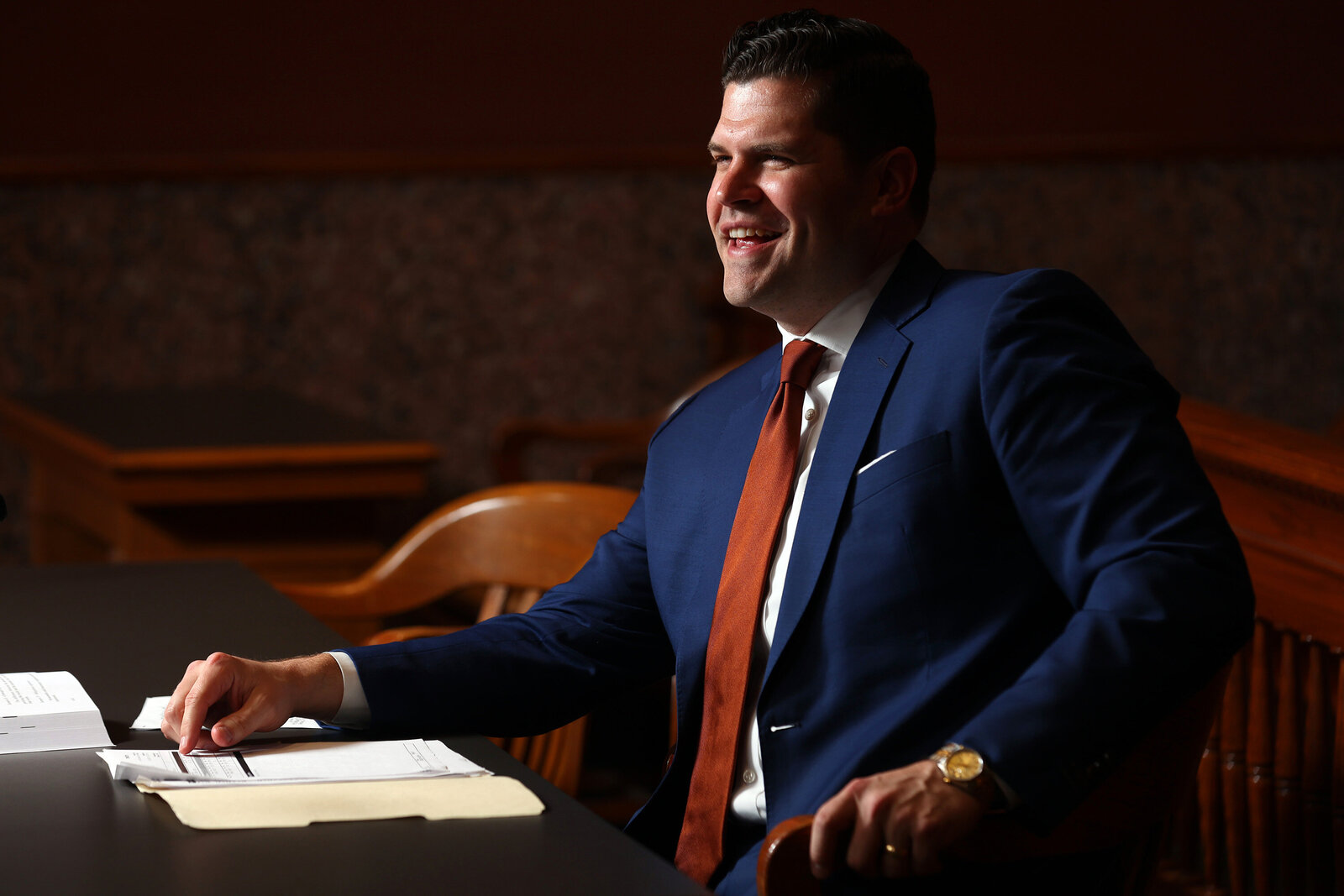
Graham Norris
Principal Attorney & Founder, Norris Legal Group PLLC
Graham Norris is an award-winning criminal defense attorney and former Tarrant County prosecutor with over a decade of courtroom experience. He has earned countless dismissals and not guilty verdicts on charges ranging from misdemeanor assault to felony murder. Graham has been recognized as a National Trial Lawyers Top 40 Under 40 attorney, named a Texas Monthly Super Lawyers Rising Star, and selected as a Top Attorney by Fort Worth Magazine.
Former Assistant District Attorney • Texas A&M School of Law Graduate • Member, National Order of Barristers
Need Legal Help? Call (817) 859-8985





Read the Comments +