

By Graham Norris
Most people assume a DWI case is settled the moment the officer announces a test result. The reality is the opposite: the tests are where DWI cases are won. Field sobriety tests rest on shaky science, breath machines depend on maintenance and protocol, and blood evidence passes through human hands at every step.
If you were arrested for DWI in Fort Worth, the test results are not the end of your case — they are the State’s evidence, and evidence can be challenged. Here is how the defense attacks each one.
Arrested for DWI in Tarrant County?
You have 15 days to fight a license suspension. Talk to a former Tarrant County prosecutor now.
Available 24/7 • Former Prosecutor • 3,600+ cases handled
Field Sobriety Tests: Subjective by Design
Texas officers rely on three standardized field sobriety tests: the horizontal gaze nystagmus (eye-tracking) test, the walk-and-turn, and the one-leg stand. What officers rarely mention is how modest the science behind them is. According to a government review of the NHTSA validation research, the original studies put the eye test at roughly 77% reliability, the walk-and-turn at 68%, and the one-leg stand at 65% — and even those numbers assume the tests are administered exactly by the book.
That assumption fails constantly. Defense review of the video routinely reveals:
- Improper administration. Rushed instructions, missing demonstrations, and scoring “clues” the protocol does not recognize. The validation applies only when the standardized procedure is followed precisely.
- Bad testing conditions. Sloped or uneven pavement, gravel, wind, darkness, passing traffic, and flashing overheads — none of which resemble the controlled settings where the tests were developed.
- The person, not the alcohol. Age, weight, injuries, inner-ear conditions, fatigue, anxiety, and footwear all produce “clues” in stone-sober people. The eye test can be triggered by medical conditions and certain medications.
These tests are voluntary in Texas, and whether to refuse a sobriety test is a real decision with real trade-offs. But if you already took them, the video usually helps the defense more than the report suggests — officers write “failed”; juries watch a person who looks ordinary.
There is a reason defense lawyers request the patrol video before anything else. Police reports are written after the arrest decision, by the person who made it, and they read accordingly: every sway becomes a “clue,” every question becomes “confusion.” The camera has no such incentive. Side-by-side, the report and the footage frequently disagree — and in Tarrant County courtrooms, the footage wins.
Breath Tests: A Machine Is Only as Good as Its Operation
The station breath test depends on assumptions that do not hold for everyone. The instrument estimates blood alcohol from breath using an averaged conversion ratio that varies from person to person. It must be properly maintained and calibrated, operated by a certified operator, and preceded by a continuous observation period to rule out mouth alcohol from burping, reflux, or dental work — a step officers frequently shortcut. Maintenance logs, operator records, and the timing on the video all become defense exhibits. Our guide on how to beat a breathalyzer in Texas walks through the most common failure points, including the roadside handheld device, which is so unreliable that its number is generally not admissible to prove your BAC at trial.
Questions about your license or court date?
Get specific advice for your situation before you speak to anyone else.
Text the FirmBlood Tests: Stronger Evidence, Same Human Weaknesses
Blood is treated as the gold standard, and that reputation is exactly why it deserves the hardest look. Between your arm and the courtroom, a blood sample must be drawn properly by a qualified person, preserved with the right additives, stored and transported correctly, tested on calibrated equipment, and documented at every hand-off. Failures at any link — clotted or fermented samples, mislabeled vials, chain-of-custody gaps, contaminated draws, lab analyst errors — can corrupt the number or keep it out of evidence entirely. The weaknesses are detailed in our article on Texas DWI blood test accuracy.
There is also the timing problem. Your BAC at the time of the blood draw is not your BAC at the time of driving. When the State’s analyst tries to calculate backward, the defense gets to attack retrograde extrapolation and its limits — a method that depends on assumptions about drinking timeline, food, and individual metabolism that the State usually cannot prove.
The Suppression Hearing: Where Test Challenges Pay Off
Challenging the tests is not just about cross-examination at trial. If the stop lacked reasonable suspicion, the arrest lacked probable cause, or a blood warrant was defective, the remedy is a motion to suppress in a Texas DWI case — and when the test results get suppressed, the State’s case often collapses with them. Many Tarrant County DWI dismissals and reductions trace directly to a suppression fight over the stop or the testing.
Why Early Review Matters
Every one of these challenges depends on materials with a shelf life: in-car and body camera video, breath instrument maintenance records, blood vials available for retesting, and dispatch records. The earlier a defense lawyer requests and reviews them, the more challenges survive. Waiting until the first court setting to “see what happens” hands the State months of head start.
Don’t miss the 15-day ALR deadline
Protect your license and your record. Talk to Graham Norris today.
Call (817) 859-8985 Free ConsultationArrested for DWI in Fort Worth? Put the Tests on Trial
The State’s case is built on tests — and tests are built on procedure, equipment, and human judgment, all of which can fail. A defense that scrutinizes every link in that chain is how DWI cases get reduced and dismissed.
Graham Norris is a former Tarrant County prosecutor who has handled more than 3,600 cases and secured over 400 dismissals. He knows how test evidence is presented because he once presented it — and he knows where it breaks. Call Norris Legal Group at (817) 859-8985 for a free consultation.
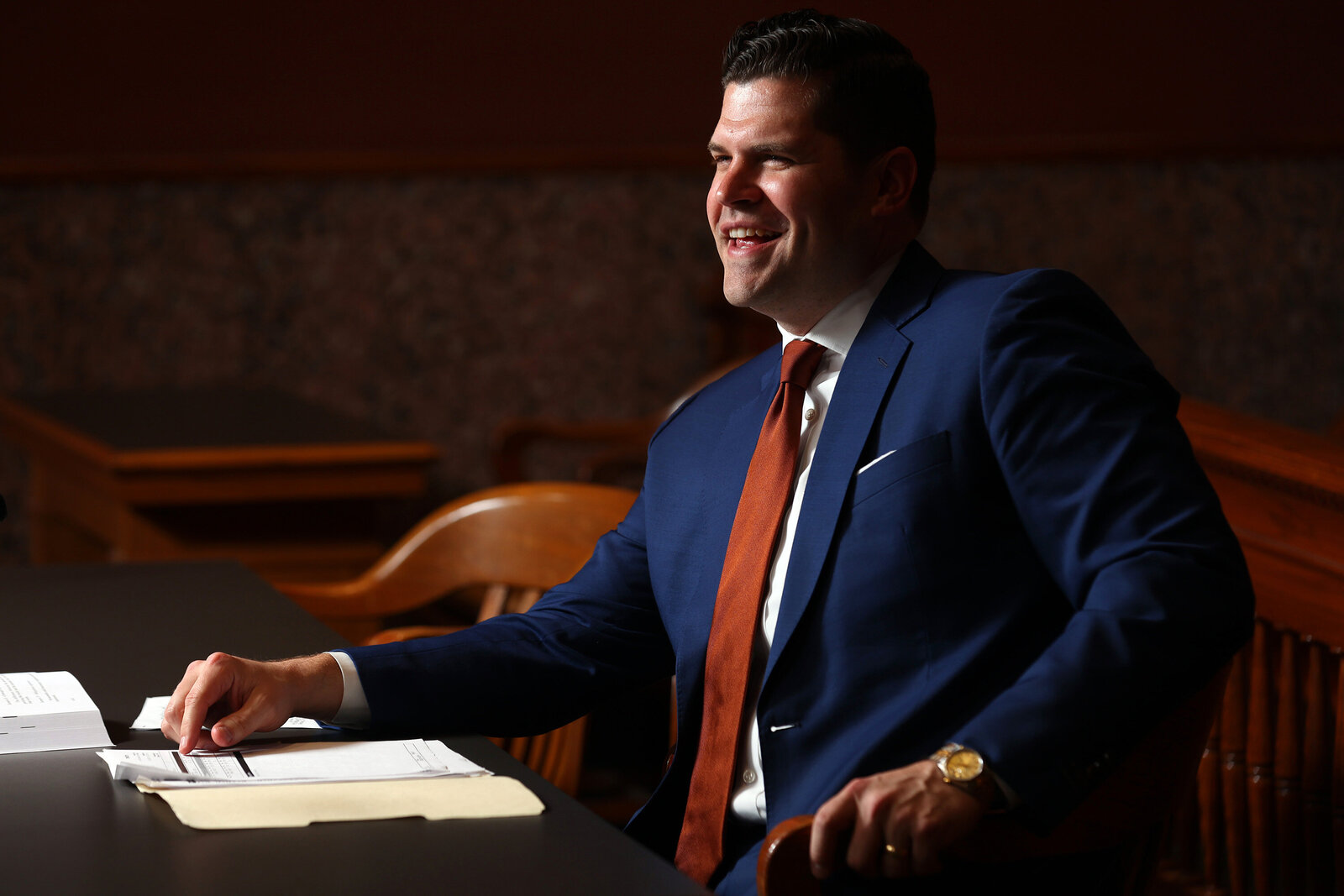
Graham Norris
Principal Attorney & Founder, Norris Legal Group PLLC
Graham Norris is an award-winning criminal defense attorney and former Tarrant County prosecutor with over a decade of courtroom experience. He has earned countless dismissals and not guilty verdicts on charges ranging from misdemeanor assault to felony murder. Graham has been recognized as a National Trial Lawyers Top 40 Under 40 attorney, named a Texas Monthly Super Lawyers Rising Star, and selected as a Top Attorney by Fort Worth Magazine.
Former Assistant District Attorney • Texas A&M School of Law Graduate • Member, National Order of Barristers
Need Legal Help? Call (817) 859-8985




Read the Comments +